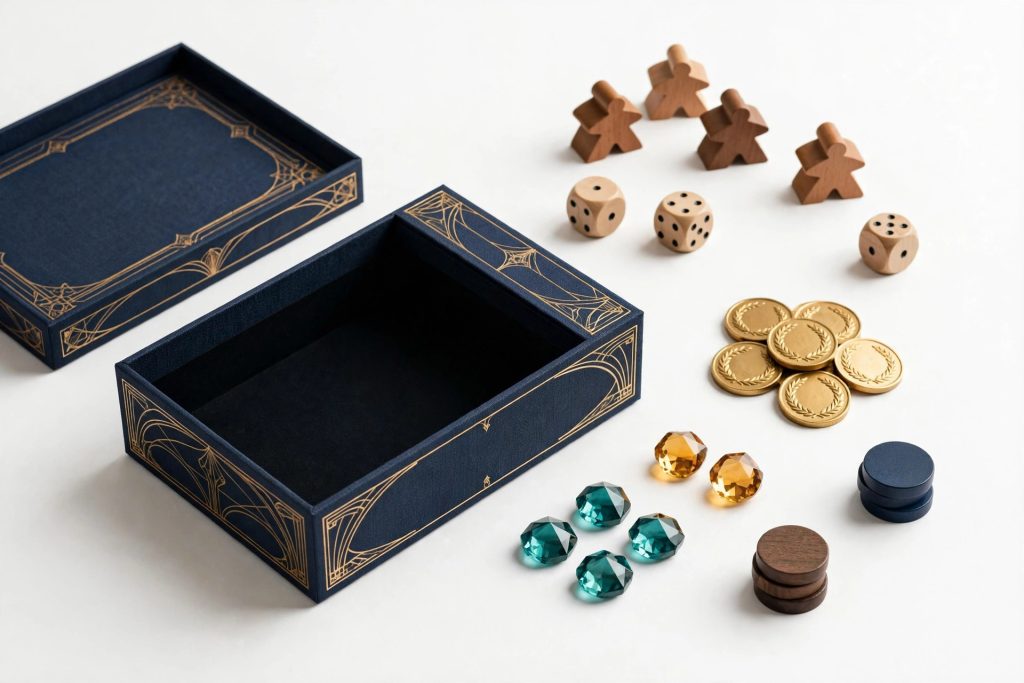
The age printed on a board game box is one of the least reliable numbers in retail. One company’s “ages 6+” is a gentle matching game; another’s is a strategy title that defeats most adults. Parents learn this the expensive way: the game looks perfect, the child melts down by turn three, and the box joins the shelf of good intentions. Choosing well requires ignoring the label and reading the child instead. This guide shows you what actually determines whether a game fits, age band by age band, and how to test a game before money changes hands.
Why Box Ages Mislead
Publishers set age labels for mixed reasons. Safety regulations drive the floor for games with small parts. Marketing drives the rest: a lower age widens the market, while a higher age makes a game feel sophisticated. Play-testing also varies wildly between companies.
Instead of trusting the print, evaluate five real factors: how long the game demands attention, whether it requires reading, how much counting and number sense it assumes, how complex its decisions are, and how it feels to lose. A game that matches your child on all five will succeed even if the box disagrees. A game that fails two of them will fail at the table no matter what the box promised.
Toddlers, Ages 2 to 3: Matching and First Turns
Toddlers manage five to ten minutes of structured play. They need zero reading, minimal counting, and rules that fit in one sentence: take a turn, match something, cheer. Look for cooperative games where everyone builds or collects together, chunky pieces that survive throwing, and no elimination of any kind.
Simple matching games, first orchard-style cooperative titles, and roll-and-move games with colours instead of numbers all work. Skip anything competitive at this age. A toddler who “loses” learns only that games end in tears, and you will spend more time managing feelings than playing.
Ages 4 to 6: Short, Lucky, and Forgiving
Attention stretches to fifteen or twenty minutes. Children this age handle simple counting, recognise some letters or sight words, and enjoy real competition, provided luck dominates skill. Heavy luck is a feature here, not a flaw: it lets a five-year-old beat a parent honestly, which keeps the game alive.
Choose games with quick turns, constant involvement, and comebacks built in. Memory games, simple card games, and roll-and-move titles with a twist suit this band well. The red flags are long waits between turns, rules with exceptions, and any game where one bad moment ends your chances twenty minutes before the game ends.
Ages 7 to 9: Real Decisions Arrive
By seven, most children read simple card text, add small numbers quickly, and, crucially, start planning one move ahead. Games can now ask for genuine choices: which card to keep, which route to risk, when to push luck and when to stop.
This is also the age where losing gets harder before it gets easier. Choose games where everyone stays involved until the end and where defeat arrives at the finish line, not halfway through. Light strategy, family card games, tile-laying, and push-your-luck dice games shine here. Avoid heavy take-that mechanics unless your child genuinely enjoys them; destroying a sibling’s work is fun for exactly one player.
Ages 10 to 12: Strategy and Social Play
Pre-teens handle forty-five-minute games, multi-step plans, bluffing, negotiation, and abstract scoring. Reading load stops mattering. This band unlocks the modern classics: gateway strategy games, deduction titles, party games with real wit, and cooperative games with difficult decisions.
Watch for the downtime problem. Games where one player thinks for three minutes while others watch will die with this group. Prefer simultaneous choices, timed turns, or games where you plan during everyone else’s turn. Also respect theme: a brilliant game about trading grain will lose to a mediocre one about dragons, every single time.
Teens and Family Play: Match the Group, Not the Teen
Teenagers can play almost any adult game mechanically. The real question is social. Will they play with family at all, and what keeps them at the table? Short party games, bluffing and social deduction, and cooperative campaign games work because they create stories and laughter. Long, silent, optimisation-heavy strategy titles work only for teens who already love them.
For mixed-age family nights, pick games with adjustable difficulty or team play, so a twelve-year-old and a grandparent compete meaningfully in the same round.
Test Before You Buy
Never gamble a full-price box on a guess. Watch a five-minute how-to-play video and honestly picture your child in the slowest moment of the game. Borrow from a library, many lend games now, or play at a board game café for the price of a coffee. Start with one game, play it several times across a month, and expand only when the current box gets requested unprompted. The right game at the right age does not just fill an evening; it teaches patience, maths, and grace in victory and defeat, disguised as fun.